
Blog
Measure Your Hat Size the Right Way: Easy Guide for the Perfect Fit

A hat can transform your entire look in seconds. It adds personality, confidence, and structure to your outfit. But none of that matters if the fit is wrong. A hat that is too tight causes headaches. One that is too loose slips down or flies away in the wind.
The truth is simple: measuring your hat size correctly is the foundation of comfort and style. This complete guide will walk you through everything you need to know, step by step, so you can find your perfect fit every time.
Why Measuring Hat Size Correctly Matters
Many people guess their size. Some assume all hats are “one size fits all.” Others simply buy the same size they wore years ago.
Head shape and size can change slightly over time. Different brands also size their hats differently. Even small differences in measurement can affect how a hat feels after hours of wear.
A properly fitted hat should:
- Sit comfortably without pressure
- Stay secure without slipping
- Rest evenly around your head
- Feel natural after long wear
If you have ever removed a hat and noticed red marks on your forehead, it was too tight. If it constantly shifts or falls, it was too large. Measuring prevents both problems.
Tools You Need to Measure Your Hat Size
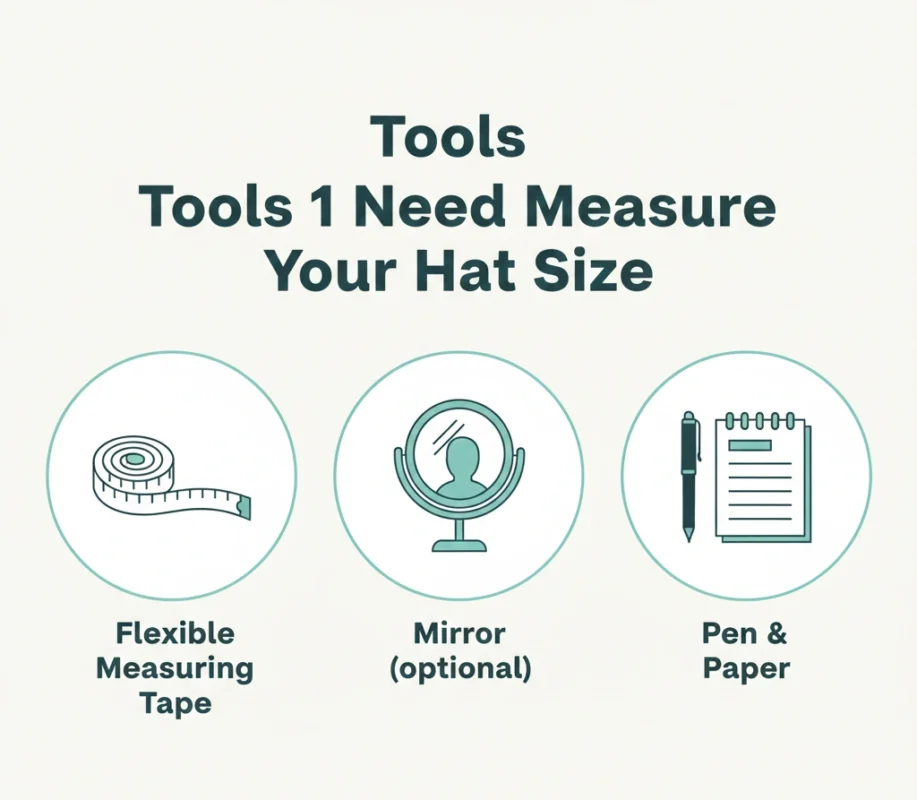
You do not need expensive tools. You only need one simple item:
- A soft measuring tape (like the kind used for tailoring)
If you do not have one, you can use:
- A piece of string
- A ruler
The process remains the same. Accuracy is the key.
Step-by-Step Guide to Measuring Your Hat Size
Follow these steps carefully for precise results.
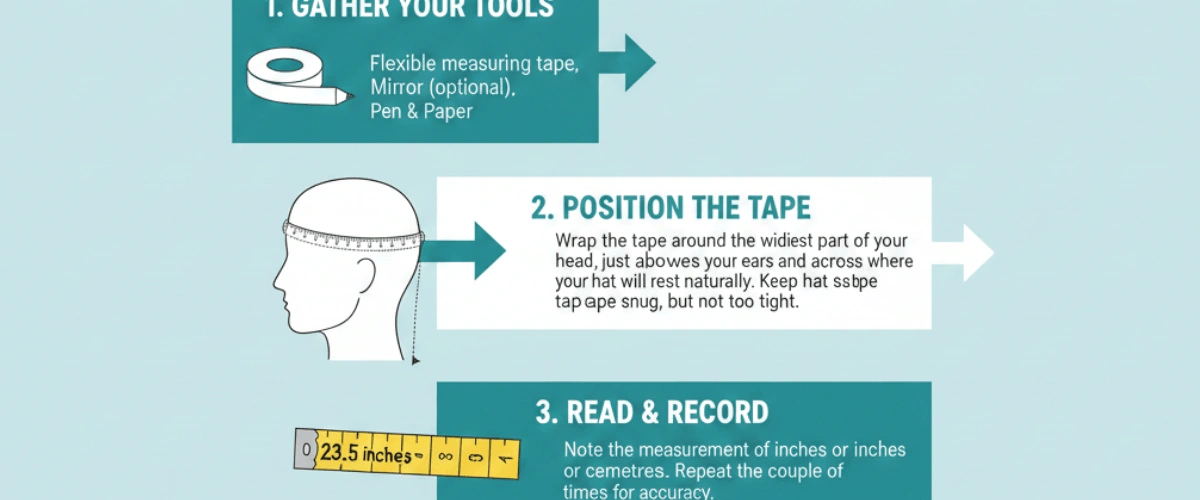
Step 1: Position the Measuring Tape Correctly
Place the measuring tape around your head about:
- 1 inch above your eyebrows
- Just above your ears
- Across the widest part of the back of your head
This area is where your hat will naturally sit.
Make sure the tape is level all the way around. Do not tilt it upward or downward.
Step 2: Keep It Snug, Not Tight
The tape should feel firm but not tight. It should sit comfortably against your head without squeezing.
If you pull too tightly, your hat will feel uncomfortable. If it is too loose, your measurement will be inaccurate.
Step 3: Record the Measurement
Look at the number where the tape meets. This measurement is usually taken in inches or centimeters.
Write it down immediately to avoid mistakes.
For best accuracy, measure twice. If both measurements match, you are good to go.
Hat Size Conversion Chart (US, UK, and International)
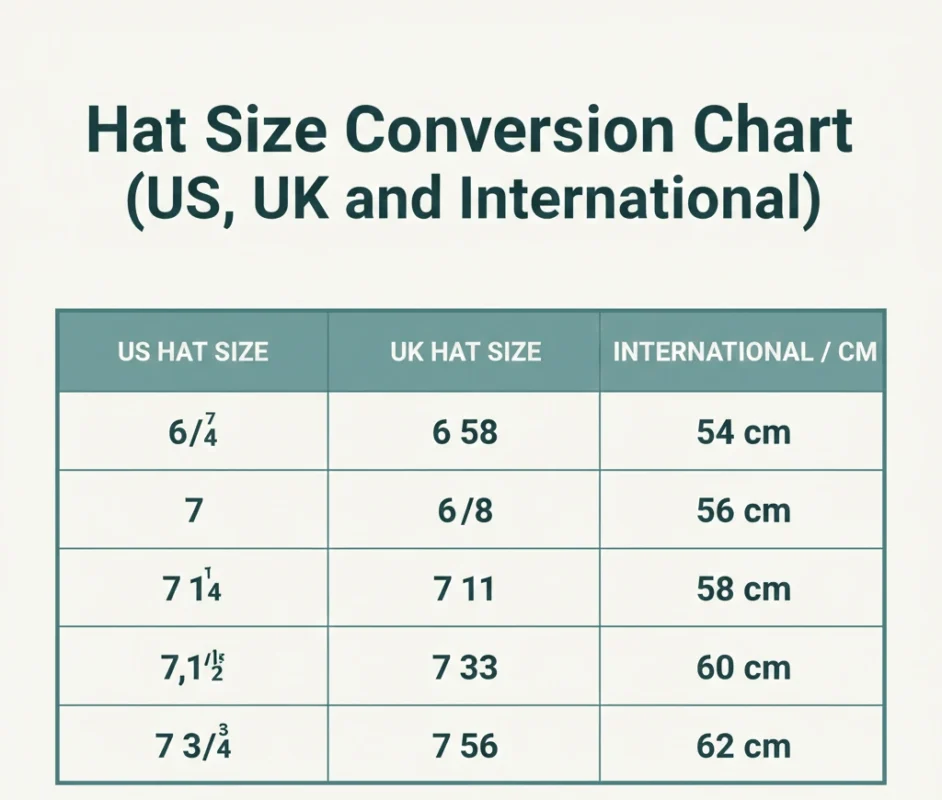
Hat sizes vary by region. Here is a general conversion guide:
In Inches (US Sizing)
- 21 1/8 inches – Small
- 21 1/2 inches – Small/Medium
- 22 inches – Medium
- 22 3/4 inches – Large
- 23 1/2 inches – Extra Large
- 24 inches – XXL
In Centimeters (International)
- 54 cm – Small
- 56 cm – Medium
- 58 cm – Large
- 60 cm – Extra Large
- 62 cm – XXL
Always check the specific brand’s size chart, as slight differences may exist.
Understanding Hat Fit: What a Perfect Fit Feels Like
The perfect hat fit should feel balanced.
A properly fitted hat will:
- Rest evenly on your head
- Not pinch your temples
- Not leave deep marks
- Stay in place when you move
It should feel secure but breathable.
You should be able to slide one finger comfortably between your head and the hat band.
Common Mistakes When Measuring Hat Size
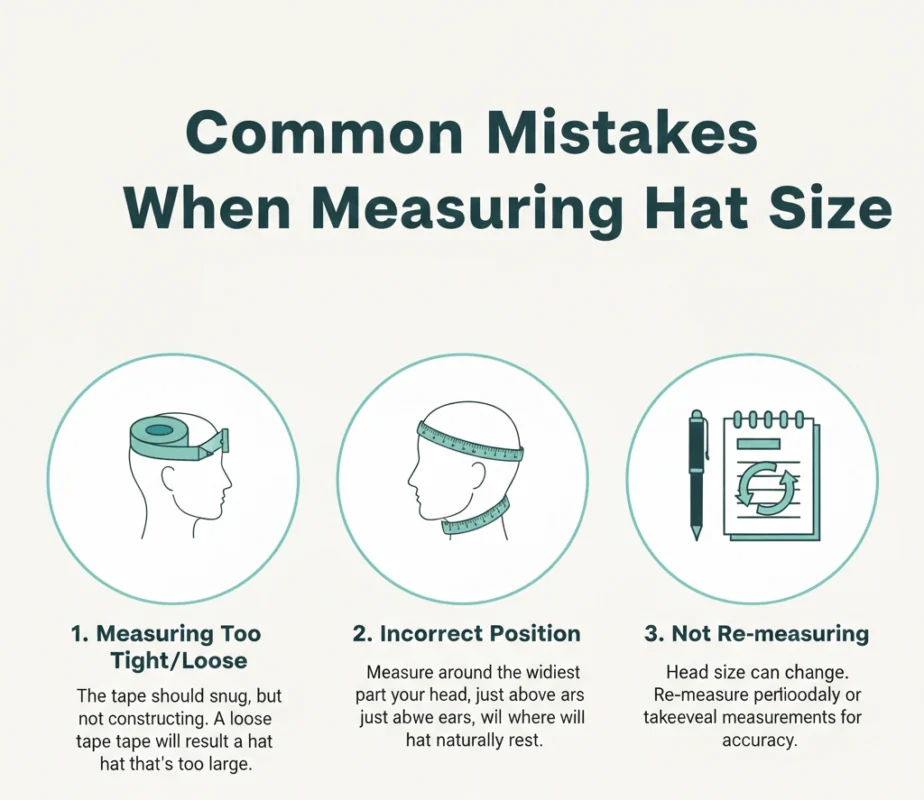
Even simple measurements can go wrong. Avoid these mistakes:
Measuring Too High on the Head
If you measure near your hairline instead of above the eyebrows, your size will be too small.
Pulling the Tape Too Tight
This results in headaches and discomfort later.
Measuring Over Thick Hair Styles
If you have thick hair, braids, or volume styles, measure as you plan to wear the hat. If you usually flatten your hair under a hat, measure accordingly.
Ignoring Head Shape
Some heads are round. Others are oval or long oval. Two people with the same measurement may prefer different hat shapes for comfort.
Measuring Hat Size for Different Hair Types
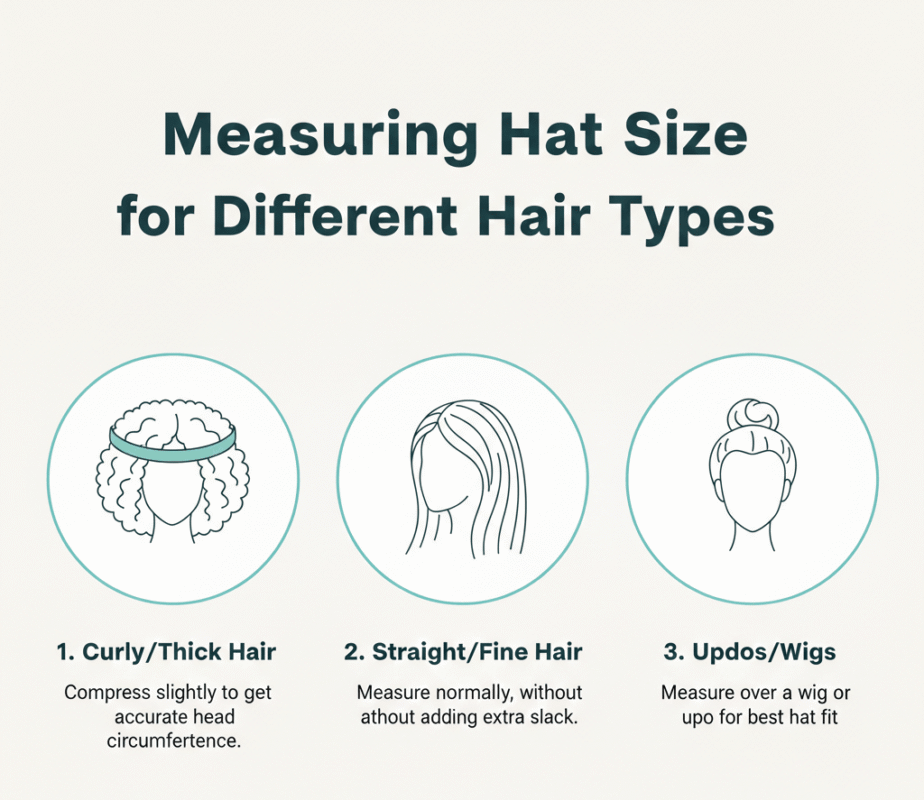
Hair affects fit more than people realize.
Short Hair
Measure normally. Your reading will be very accurate.
Long or Thick Hair
If you plan to wear your hair down, measure with it down.
If you usually tie it back when wearing hats, measure with your hair tied back.
Consistency ensures accuracy.
Braids or Protective Styles
Measure with the hairstyle you intend to wear under the hat most often.
One Size Fits All: What It Really Means
Many hats are labeled “one size fits all.” This usually means they fit most people between 21.5 to 23 inches.
These hats often include:
- Adjustable straps
- Elastic bands
- Snapback closures
- Velcro fasteners
They provide flexibility but may not offer the same precision as sized hats.
If you are between sizes, adjustable hats can be a great option.
How to Measure Hat Size for Kids
Children grow quickly, so measuring regularly is important.
Follow the same steps:
- Measure 1 inch above eyebrows
- Keep tape level
- Measure twice
Kids’ sizes are smaller, usually between 49 cm and 54 cm.
Avoid buying oversized hats for children. A loose hat can obstruct vision or fall off easily.
How to Measure Hat Size Without Measuring Tape
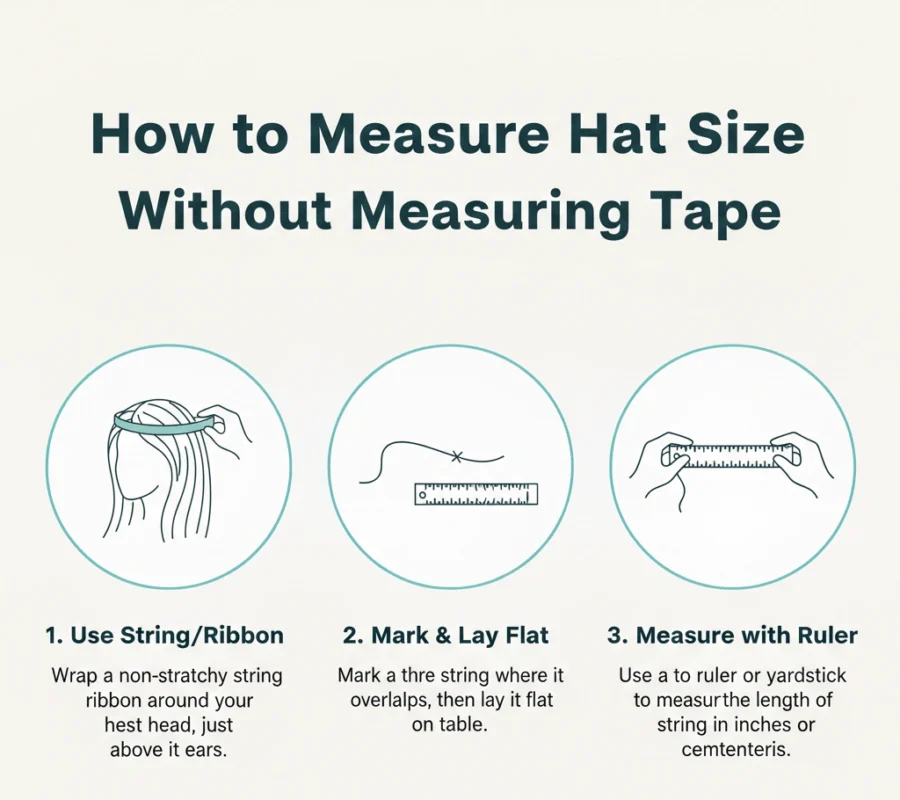
If you do not have a soft measuring tape:
- Wrap a string around your head using the same method.
- Mark the meeting point.
- Lay the string flat against a ruler.
- Record the measurement in inches or centimeters.
This method is surprisingly accurate when done carefully.
Seasonal Fit Considerations
Weather affects how a hat feels.
Summer
Your head may expand slightly due to heat. Choose a breathable fit, not overly tight.
Winter
Cold weather hats may include lining. If you plan to wear thick liners or beanies underneath, consider sizing up slightly.
How Different Hat Styles Fit
Different styles sit differently on the head.
Baseball Caps
Usually adjustable. Focus on comfort around the forehead and crown depth.
Fitted Caps
Precise measurement is essential. Even 1/8 inch matters.
Cowboy Hats
Often sized precisely and shaped differently. Crown height and brim width also affect fit.
Always measure carefully before buying a disco mirror hat, as the added mirrored tile design makes a proper fit even more important for balance, comfort, and secure wear during parties and festivals.
Fedora or Dress Hats
Should sit slightly above the ears and not press on the temples.
Bucket Hats
Often relaxed fit but should not slide over your eyes.
Understanding the style helps you choose correctly.
What to Do If You Are Between Sizes
Being between sizes is common.
Here is what you can do:
- Size up and use hat sizing tape
- Choose adjustable styles
- Try brands known for true-to-size measurements
Sizing tape is a small foam strip placed inside the sweatband to tighten the fit slightly.
Signs Your Hat Is Too Tight
- Headaches after short wear
- Red marks on forehead
- Pressure on temples
- Difficulty removing hat
A tight hat reduces circulation and comfort.
Signs Your Hat Is Too Loose
- Slides down over eyes
- Moves when you bend
- Falls off easily in wind
- Gaps around the crown
A loose hat lacks structure and security.
How Often Should You Measure Your Hat Size?
Adults usually maintain a stable head size. However, re-measure if:
- You experience weight changes
- You change hairstyles significantly
- You buy from a new brand
- The hat feels different than expected
Accuracy ensures satisfaction.
Professional Tip for the Most Accurate Measurement
Measure at the end of the day.
Your head can slightly expand during the day due to natural circulation and temperature changes. Measuring later in the day ensures your hat will not feel tight after hours of wear.
How to Ensure the Perfect Hat Fit When Shopping Online
Online shopping requires extra care.
Before purchasing:
- Check the brand’s size chart
- Compare your measurement carefully
- Read customer reviews about sizing
- Look for return or exchange policies
If possible, choose brands that provide detailed sizing guides.
Precision Leads to Comfort
A hat is not just an accessory. It frames your face. It defines your style. It protects you from sun and weather.
But none of that matters if the fit is wrong.
Measuring your hat size the right way takes less than five minutes. With a simple tape and careful positioning, you can eliminate guesswork completely.
When you wear the correct size, you feel it instantly. No pressure. No slipping. Just a secure, comfortable fit that lasts all day.
Take the time to measure properly. Follow the steps carefully. Double-check your numbers. Compare them with sizing charts.
That small effort guarantees confidence, comfort, and a perfect fit every time.